
Background & Origins
Developed in 1987 by the Biological Sciences Curriculum Study (BSCS). Rooted in the 1962 work of educators J. Myron Atkin and Robert Karplus, who identified exploration, term introduction, and concept application as key elements of effective learning cycles.
Based on constructivist theory — people construct knowledge and meaning through experiences.
What It Is
A collaborative, inquiry-based instructional model where students solve problems and investigate new concepts by asking questions, observing, analyzing, and drawing conclusions. The teacher acts as a facilitator rather than a lecturer throughout the process.
The Five Phases
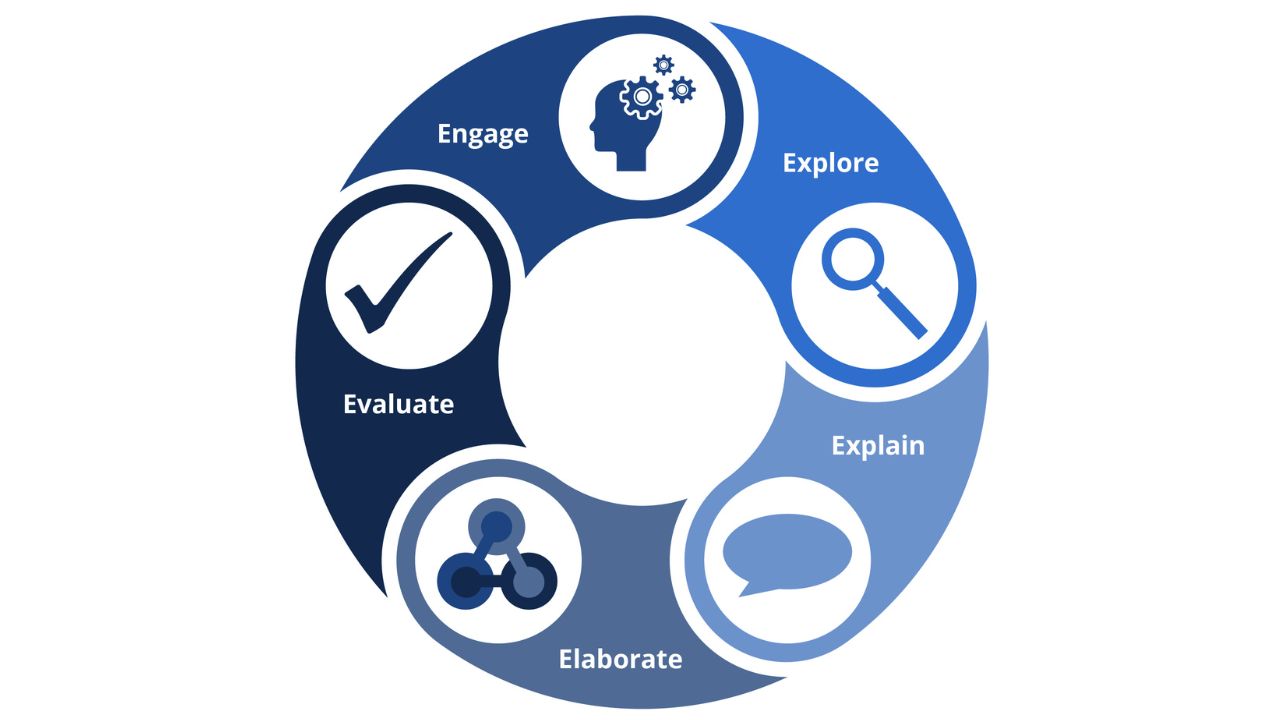
Engage
Activates prior knowledge, identifies gaps, and sparks curiosity about the new concept.
Explore
Students learn hands-on through concrete experiences, scientific method, and peer communication.
Explain
Teacher-led phase where students share findings and formal concepts, vocabulary, and definitions are introduced.
Elaborate
Students apply new knowledge through presentations or further investigations to deepen understanding.
Evaluate
Includes formal and informal assessment, self-assessment, peer assessment, and written work.
Effectiveness
-
Most effective when used for new concepts over a unit of two to three weeks, not a single lesson.
-
Research shows significantly better acquisition of scientific concepts compared to traditional instruction.
-
Proven to increase learning retention and positively affect student achievement.
Source: https://www.teachthought.com/learning-posts/5e-model/
Last updated: November 21, 2025
Read time: 5 minutes
